
Bones and muscles form the framework of the face. In a young child, they grow quickly and can develop problems quickly, too. When the bones, muscles and teeth work well together, they create a stable, comfortable bite and pleasing appearance.
When the bones and muscles grow improperly, the teeth don’t fit together well. This can cause an unbalanced profile and other problems. Either genetics or environmental factors may have influenced the development of your child’s jaws and muscles. For example, your child may have inherited a small jaw from one parent and large teeth from the other. Also, sleeping patterns or oral habits, such as thumb sucking may have affected how his cheeks and jaws have developed.
Why Age 7?
Some orthodontic problems are easier to correct before jaw growth has slowed. By age 7, your child’s bite has been established with the eruption of the first permanent molars. In addition, the presence of permanent incisors (front teeth) will allow an orthodontist to detect and evaluate possible crowding patterns, detrimental oral habits, and an improper bite. A screening by age 7 also helps to determine if treatment will be necessary and determine the best time for your child to be treated.
What Are the Benefits of Early Orthodontics?
Some of the potential benefits may include:
- A reduced need to extract permanent teeth.
- Reduce or eliminate the need for jaw surgery.
- An opportunity to guide the growth of the jaw.
- Guide incoming permanent teeth into desirable positions.
- Lower risk of trauma or injury to protruded front teeth.
- Correct harmful oral habits, such as finger and thumb sucking.
- Maintain or gain space for the permanent teeth that are coming in.
- May minimize the need for more extensive and costly procedures later.
- Early orthodontic treatment may also aid in a child’s psychological development when related to appearance and self-esteem.
- Reduce or eliminate abnormal swallowing or speech problems.
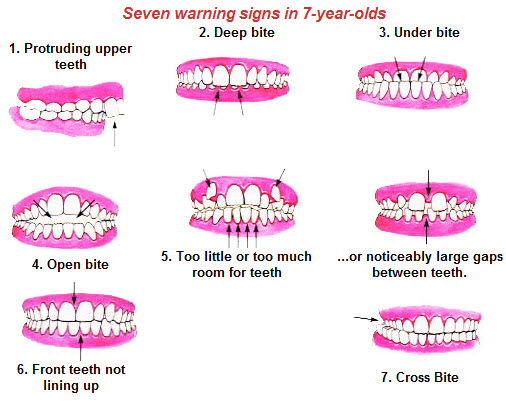
Is Early Orthodontic Treatment Always Required?
The need for interceptive or early orthodontics must be determined on an individual basis. An orthodontist can advise parents if the problem should be treated at a younger age or if treatment should wait until more permanent teeth are in place.
Seek Treatment Earlier Than Age Seven If Your Child Has:
- Difficulty chewing.
- Open-mouth breathing.
- Thumb or finger sucking.
- Overlapping or crowding of erupting permanent teeth.
- Jaws that click or pop.
- Biting into the cheek or into the roof of the mouth.
- Speech problems.
- Grinding or wearing down of the teeth.
- Obvious abnormal bite development of any kind.

Pediatric Dental Center
Warren, MI
Dr. Shah, Dr. O’Riordan